Bamyan’s great niches
Home → Places → Bamyan
The cliffs of Bamyan preserve the traces of a Buddhist centre that flourished along the routes connecting Central and South Asia.
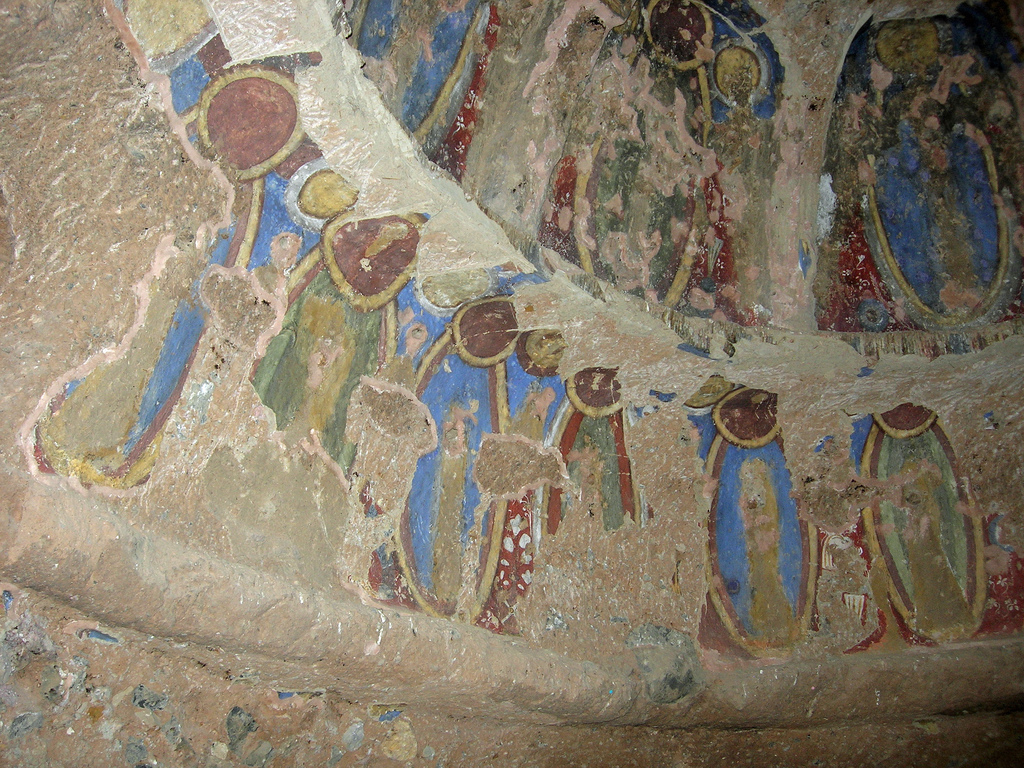
Photo: Carl Montgomery, Wikimedia Commons, CC BY 2.0

A crossroads of ideas
Between roughly the 4th and 6th centuries, two immense standing Buddhas were carved into the sandstone cliff. Caves around them served as monasteries and were decorated with wall paintings. The site reflects the movement of people, beliefs and artistic traditions along the Silk Roads.
The statues were destroyed in March 2001. Their empty niches remain powerful records of both the valley’s long history and the loss of cultural heritage.
A living cultural landscape
Bamyan is not only an archaeological site. It is a highland valley where communities continue to farm, study and build their lives among layers of history. UNESCO added the Cultural Landscape and Archaeological Remains of the Bamyan Valley to the World Heritage List in 2003.