The Qur'an

Home » Islam » Qur'an
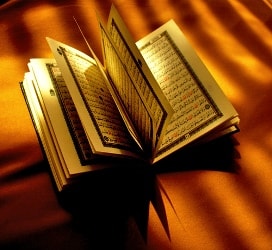

Qur'an


The Qur'an (Arabic: القرآن al-qur'an, literally "the recitation";
also sometimes trans lite rated as Quran, Quran, Koran, Alcoran
or Al-Qur'ān) is the central religious text or Islam


Qur'an:

The text of the Qur’an consists of 114 chapters of varying lengths, each known as a sura. Chapters are classed as Meccan or Medinan, depending on where the verses were revealed. Chapter titles are derived from a name or quality discussed in the text, or from the first letters or words of the sura. Muslims believe that Muhammad, on God's command, gave the chapters their names. Generally, longer chapters appear earlier in the Qur’an, while the shorter ones appear later. The chapter arrangement is thus not connected to the sequence of revelation. Each sura except the ninth commences with the Basmala, an Arabic phrase meaning (“In the name of God, Most Gracious, Most Merciful”). There are, however, still 114 occurrences of the basmala in the Qur’an, due to its presence in verse 27:30 as the opening of Solomon's letter to the Queen of Sheba.
Each sura is formed from several ayat (verses), which originally means a sign or portent sent by God. The number of ayat differ from sura to sura. An individual ayah may be just a few letters or several lines. The ayat are unlike the highly refined poetry of the pre-Islamic Arabs in their content and distinctive rhymes and rhythms, being more akin to the prophetic utterances marked by inspired discontinuities found in the sacred scriptures of Judaism and Christianity. The actual number of ayat differs, estimated 6100. The most popular edition of the Qur’an, which is based on the Kufa school tradition, contains 6,236 ayat.

There is a crosscutting division into 30 parts, ajza, which our prophet Mohammed got in 30 days (4 days of Ramazan). each containing two units called ahzab, each of which is divided into four parts (rub 'al-ahzab). The Qur’an is also divided into seven stations (manazil).


The Qur'an speaks well of the relationship it has with former books (the Torah and the Gospel) and attributes their similarities to their unique origin and saying all of them have been revealed by the one God.
The Qur'an retells stories of many of the people and events recounted in Jewish and Christian sacred books (Tanakh, Bible) and devotional literature (Apocrypha, Midrash), although it differs in many details. Adam, Enoch, Noah, Heber, Shelah, Abraham, Lot, Ishmael, Isaac, Jacob, Joseph, Job, Jethro, David, Solomon, Elijah, Elisha, Jonah, Aaron, Moses, Zechariah, John the Baptist, and Jesus are mentioned in the Qur’an as prophets of God (see Prophets of Islam). Muslims believe the common elements or resemblances between the Bible and other Jewish and Christian writings and Islamic dispensations is due to their common divine source, and that the original Christian or Jewish texts were authentic divine revelations given to prophets.